The "Middle Corridor" Boom: Institutional Investment in Georgian Logistics and Industrial Real Estate (2026)
უკან
While the retail market remains fixated on residential apartments and boutique hospitality in Tbilisi, global institutional capital is aggressively positioning itself in a completely different asset class: Logistics and Industrial Real Estate.
Driven by historic geopolitical shifts and the permanent restructuring of global supply chains, Georgia has emerged as the critical nexus of the "Middle Corridor" (the Trans-Caspian International Transport Route). As international freight pivots away from traditional northern routes, the demand for transit infrastructure has skyrocketed. For private equity funds, Family Offices, and sophisticated developers in 2026, the severe deficit of modern warehousing in Georgia represents one of the most lucrative, uncrowded institutional plays of the decade.
1. The Macro Catalyst: Capitalizing on the Middle Corridor
Institutional real estate strategy is dictated by macroeconomics, and the macro thesis for Georgia is currently defined by transit.
Billions of dollars of cargo flowing between China, Central Asia, and Europe are now being routed through Georgian ports and highways. However, the physical real estate infrastructure required to support this massive influx of trade—specifically dry ports, fulfillment centers, and cold-storage facilities—is fundamentally lacking. Smart Money is stepping in to bridge this gap, pivoting capital away from saturated urban residential markets and deploying it into the development of large-scale, tech-enabled industrial hubs.
2. The Structural Deficit of Class-A Warehousing
The Georgian industrial market is characterized by a severe supply-demand imbalance. The existing supply of warehousing largely consists of defunct, inefficient Soviet-era facilities that cannot accommodate the operational requirements of modern international logistics firms.
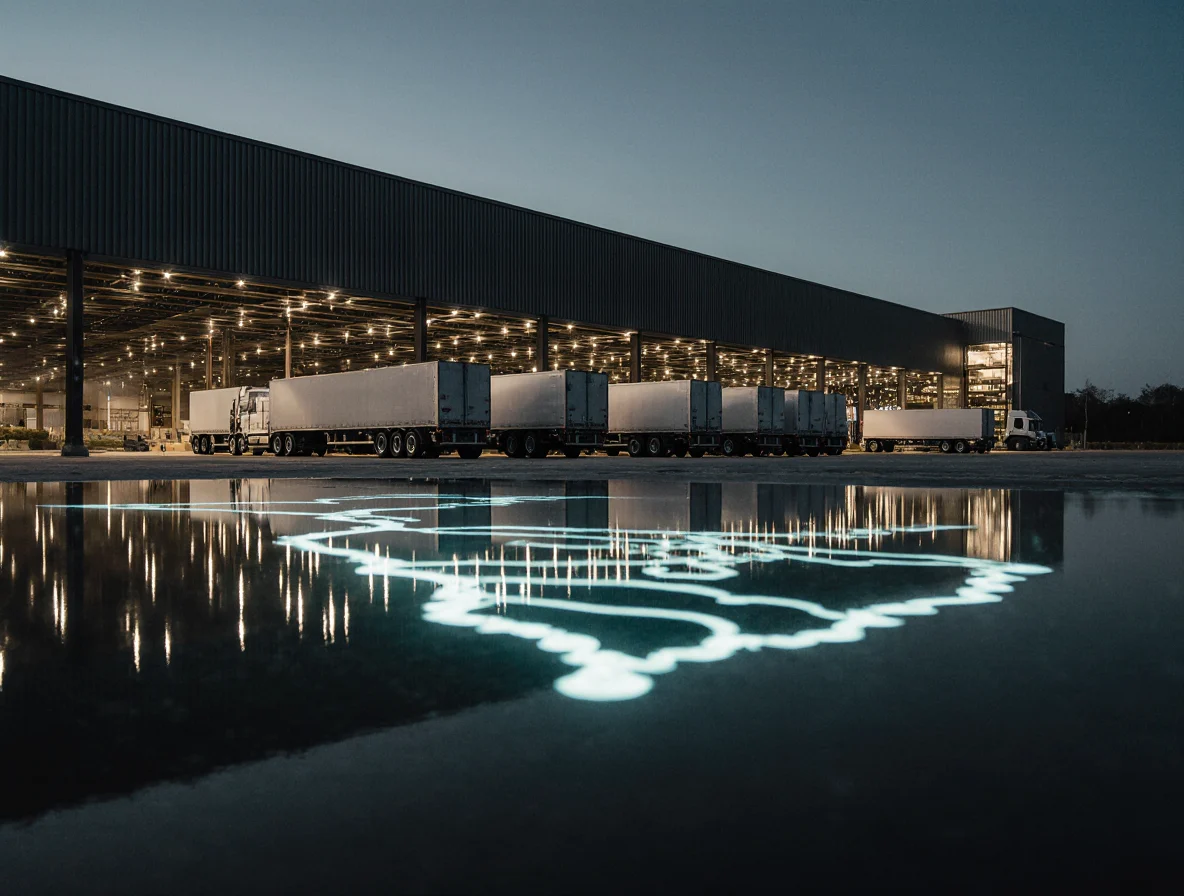
Institutional developers are capitalizing on this structural deficit by constructing purpose-built, Class-A logistics parks. These hyper-modern facilities feature 12-meter clear heights, automated sorting technology, advanced cross-docking capabilities, and strict ESG compliance. Because the demand from international freight forwarders, regional distributors, and e-commerce giants is practically infinite while the supply of Class-A space is near zero, developers dictate the market terms, commanding premium lease rates that drive double-digit development yields.
3. Long-Term NNN Leases and Blue-Chip Tenants
The ultimate appeal of industrial real estate for institutional funds is the unparalleled stability of the income stream.
Unlike the high tenant turnover associated with residential or premium hospitality sectors, logistics hubs secure the most reliable tenants in the world: multinational corporations and sovereign-backed supply chain operators. Developers in Georgia are locking in 10-to-15-year Triple-Net (NNN) leases with these blue-chip entities. The tenant absorbs all operational expenses, property taxes, and maintenance costs (CAPEX), delivering a purely passive, inflation-hedged Net Operating Income (NOI) that provides bond-like security for the fund's balance sheet.
4. Strategic Land Banking at Transit Nodes
For Family Offices focused on generational wealth preservation and capital compounding without construction risk, the Middle Corridor has sparked a highly strategic Land Banking rush.
Institutional capital is quietly acquiring vast, unzoned land parcels adjacent to critical transit nodes: the East-West Highway corridors, areas surrounding the Kutaisi International Airport, and the hinterlands of the Poti and Batumi seaports. As state and international infrastructure investments expand into these zones, the land undergoes massive, forced appreciation. Funds can hold these low-tax assets passively, ultimately exiting by selling the entitled land at a massive premium to international logistics developers entering the Georgian market.
Develop Industrial Assets with Redman Realty Capturing the Middle Corridor's industrial boom requires specialized local intelligence and access to off-market strategic land. Redman Realty’s B2B division is the premier advisory partner for institutional logistics development in Georgia. We source prime industrial land along key transit arteries, provide comprehensive macroeconomic underwriting, and connect developers with blue-chip corporate tenants for long-term NNN pre-leases. Contact our advisory team to position your capital at the center of global trade.




იპოვე შენი ოცნების სახლი დღესვე